1. Definition and Scope
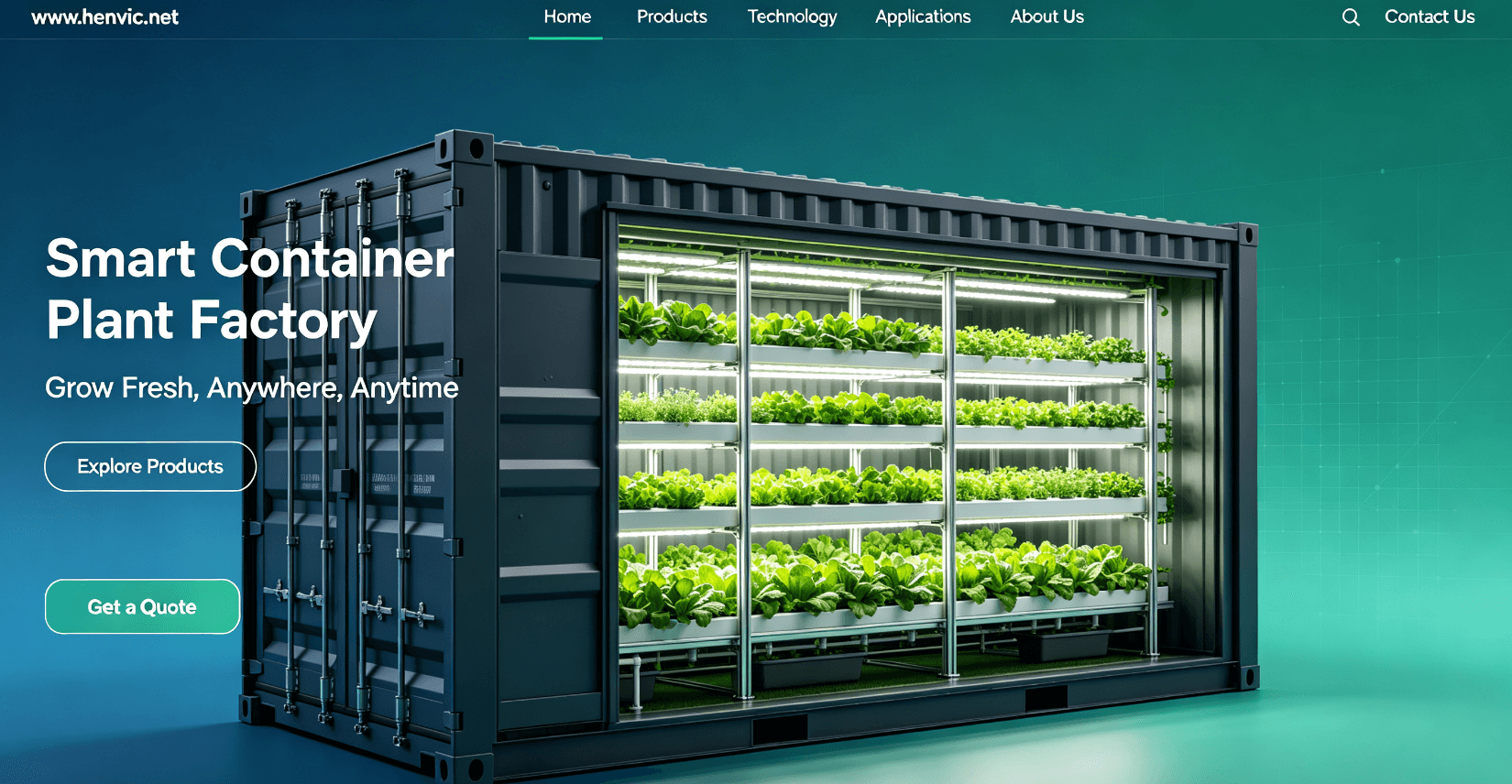
A leafy-green smart cultivation cabin is a factory-built, sealed and thermally insulated enclosure in which the entire growth environment — photon flux, photoperiod, air temperature, humidity and vapour pressure deficit, carbon dioxide, air movement, root-zone chemistry and irrigation — is generated internally, measured continuously and held by closed-loop control rather than by season, latitude or operator judgement.
The category is deliberately broader than "container". It spans standard 20- and 40-foot high-cube modules, insulated panel rooms of 50–600 m³, rack-mounted laboratory cabinets, and multi-tier walk-in cabins built into buildings. What unites them is not the shell but the architecture: a boundary-value system in which outdoor weather becomes a disturbance term rather than a driver. A leafy cabin can be sited on non-arable land, an urban rooftop, a desert site, a polar station or a hospital basement, and it will produce the same head of lettuce on the same schedule in all of them.
Its real function is narrow and worth stating plainly: it converts a biological capability into an industrial one. It cannot create a capability the plant does not have — no enclosure makes an ill-adapted cultivar head properly or prevents bolting in a variety that bolts under long days. What it delivers is repeatability, schedulability, traceability and geographic independence for a capability already proven in research.
2. Why Leafy Greens Are the Reference Crop
Leafy vegetables — lettuce, pak choi, spinach, rocket, kale, mustard, watercress, baby-leaf mixes — dominate cabin production for structural reasons, not fashion.
They are fast: seed to harvest typically runs 30–55 days indoors, so a cabin schedules eight to twelve cycles a year, and each cycle is cheap to lose and quick to correct. They are shallow-rooted, which admits nutrient film technique and deep water culture and removes substrate handling entirely. They are low-biomass and whole-head harvestable, which makes mechanisation and grading simple. And critically, they are highly responsive to the variables a sealed module controls best — cell expansion and turgor, which set harvest weight, respond to humidity and airflow within hours.
Two agronomic properties make leafy greens uniquely suited to — and uniquely demanding of — closed control: tipburn and nitrate accumulation. Both are treated in Section 5 because they are the two defects that decide whether a cabin's output is saleable, and both are programming problems rather than equipment problems.
3. Cabin Architecture
3.1 Envelope and form factor
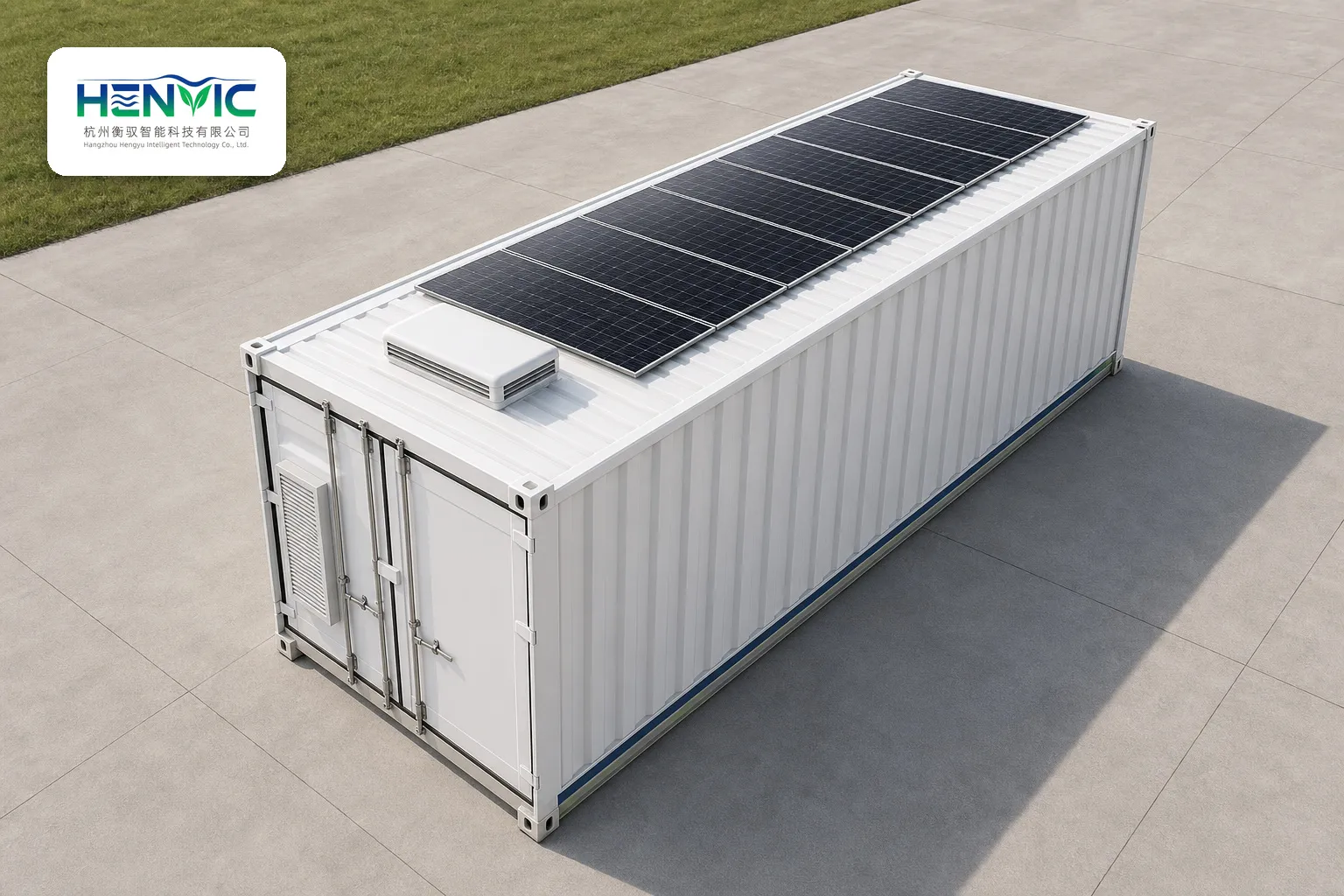
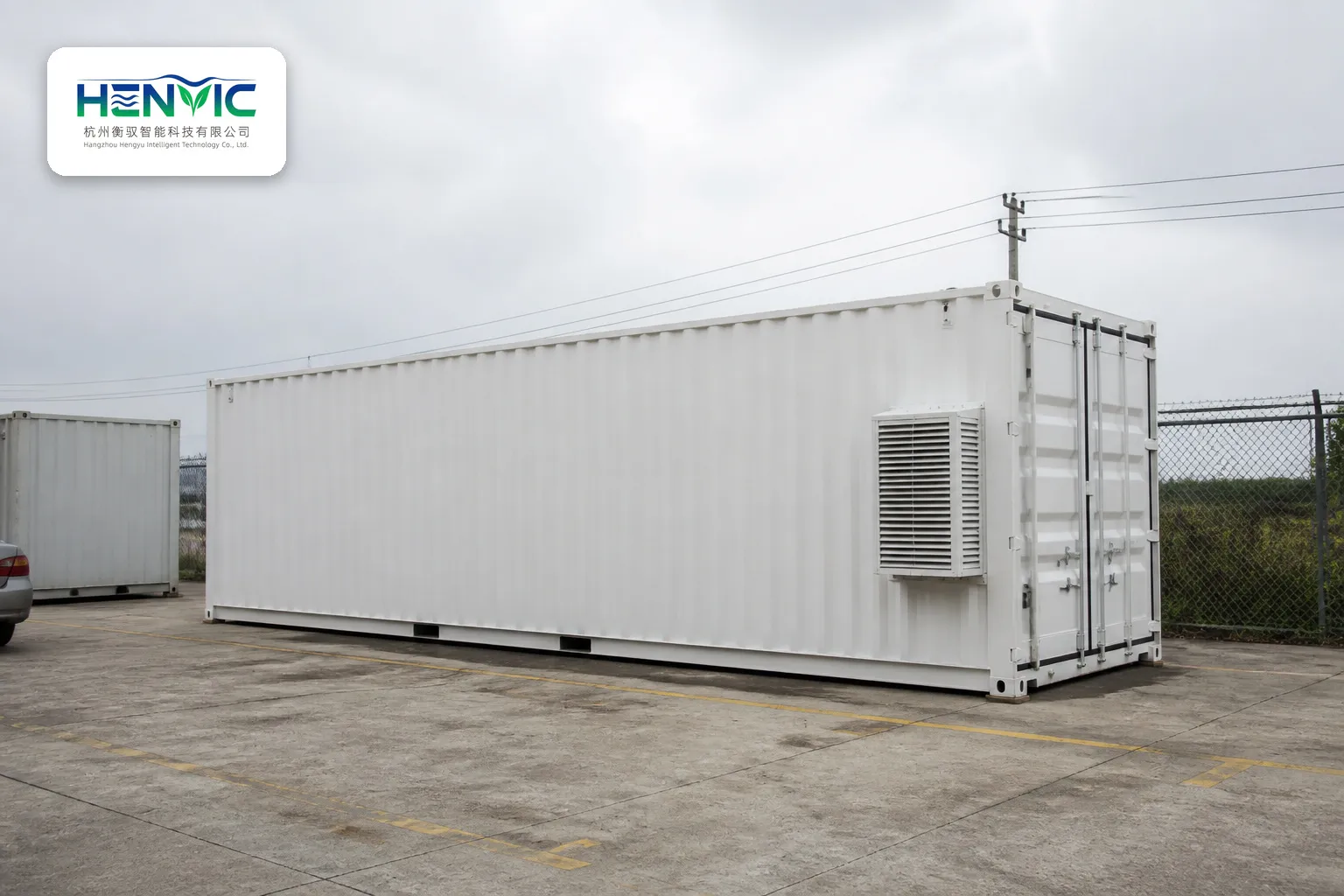
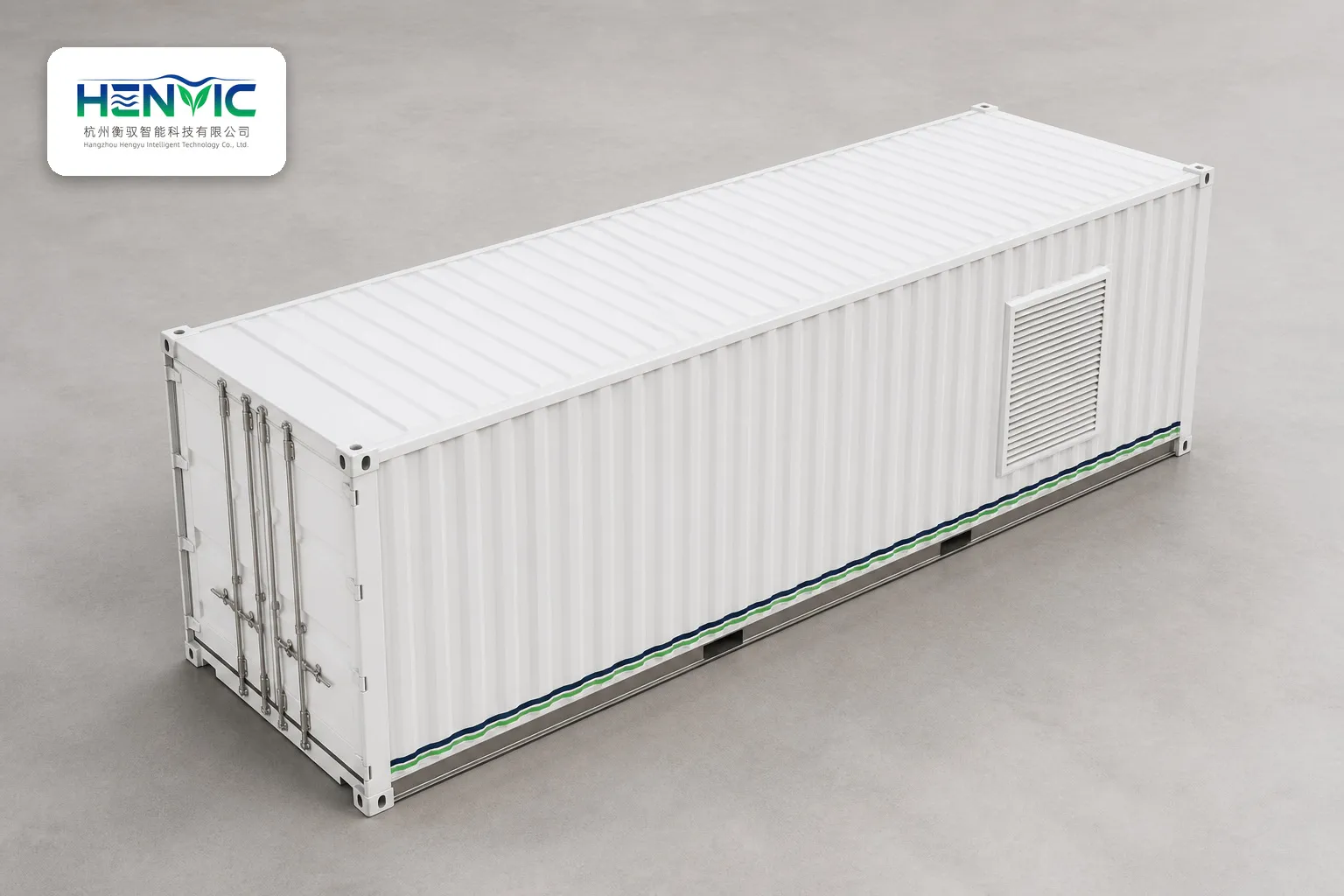
Standard ISO dimensions are non-negotiable in containerised units: a 40-foot high-cube gives roughly 12.0 m internal length, 2.35 m width and 2.6–2.7 m usable height; a 20-foot unit about 5.9 m. External width is fixed at 2.44 m so the unit sits on a truck chassis and stacks at terminal density. Ceiling height, not floor area, is therefore the resource the grower exploits — each additional tier is a multiple of output from the same road-legal footprint.
The envelope itself is insulated panels with deliberately managed thermal bridging, sealed against dust and spores, with a separate material airlock. Sealing serves biosecurity as much as energy efficiency. Interior surfaces must tolerate permanent condensation and repeated sanitiser exposure, and floors must drain completely — details that are unglamorous and decisive.
3.2 Multi-tier racking
Four to six tiers is typical. Tier count is the central design trade-off: adding levels raises output per footprint while simultaneously reducing the vertical space available for air movement and light throw, and worsening uniformity between bottom and top. Practical mitigations include individually adjustable bar heights, side-emitting fixtures, and vertical circulation that mixes air between tiers rather than only across the canopy.
The honest metric is measured uniformity. A rack with 5 % temperature spread and 30 % canopy photon-flux spread between tiers is, agronomically, five different cabins stacked together — which matters acutely when a recipe assumes uniform conditions. Mechanical design must also permit full tray extraction for harvest, cleaning and inspection, which in a 2.35 m width means either single-depth racks with a central aisle or cantilevered multi-depth systems with rolling trays.
3.3 Lighting
LED bars are near-universal, and design is in photon terms rather than fixture counts.
• PPFD at canopy: 150–300 µmol·m⁻²·s⁻¹ for leafy greens, higher during finishing.
• Daily light integral: commonly 12–17 mol·m⁻²·d⁻¹. DLI — PPFD × photoperiod — is the number that correlates with yield.
• Photoperiod: 16–20 h. Longer is not automatically better; the marginal photosynthesis in hour 19 is often poor value and, in bolting-sensitive cultivars, costs quality.
• Spectrum as a control input: blue governs compactness, thickness and phenolic development; red carries photosynthetic efficiency; far-red manipulates leaf expansion and can rescue low-light stretch, but over-supply risks elongation and looseness.
Because essentially all electrical input in a sealed module becomes heat, lamp efficacy is doubly valuable — it saves energy in the lamp bill and reduces the load the cooling plant must reject. That coupling, not fixture price, drives cabin economics.
3.4 Climate plant
Heat-pump heating and cooling, dedicated humidification, dehumidification and CO₂ dosing, with ultra-low-ambient compressors extending deployment into severe cold. Redundancy — a second environmental unit per cabin — is now normal in multi-cabin farms, because a single controller failure otherwise collapses an entire batch. Power provision is the most common deployment constraint: a 40-foot leafy cabin draws on the order of 15–30 kW at full load, frequently requiring a 63 A three-phase supply, with uninterruptible backup for lighting, circulation and control treated as mandatory rather than optional.
The most common sizing error in the industry is dehumidification sized on cabin volume instead of peak transpiration. Transpired water has nowhere to go; sizing on volume guarantees humidity excursions.
3.5 Distribution as a flow-field problem
Air, water and light are flow-field problems, not duct- or pump-sizing problems. The decisive metric is spread across every shelf level and corner. Low-velocity, non-directed canopy sweep — typically 0.1–0.3 m/s — sustains transpiration-driven mineral transport without mechanical damage. Directed jets deform heads, desiccate margins and produce the classic "half the rack is fine" pattern that usually signals a flow-field failure rather than a control fault.
3.6 Root zone and irrigation loop
Four systems are in commercial use. Nutrient film technique offers excellent oxygenation, low water inventory and low weight per tier — important when tray mass multiplies by tier count — but film interruption in one channel kills that channel's crop. Deep water culture / floating raft is thermally stable and forgiving, at the cost of high water mass and thermal inertia. Substrate culture on plugs and shallow gutters is most forgiving of faults and closest to nursery practice, at the cost of consumables and buffering introduced into wet/dry cycling. Aeroponics gives the fastest growth but the smallest margin for pump failure.
Container units for leaf vegetables most often deploy NFT or DWC with a nursery stage on substrate plugs — the combination that minimises weight per tier while keeping the engineering simple and inspectable. The loop includes acid and stock dosing, and — most under-specified — root-zone chilling and oxygenation. Warm, hypoxic solution is the entry point for Pythium and other oomycetes; a cabin that cools only the air loses crops from below. Every cabin should instrument solution temperature and dissolved oxygen, not just air.
3.7 Instrumentation and software
Dense instrumentation is the defining feature of "smart": multi-point air temperature, RH, VPD, CO₂, PPFD and spectral characteristics; solution EC, pH, temperature, level and dissolved oxygen; flow and pressure per channel; power and lighting status.
Two software functions are routinely conflated. Recipe executionencodes a species' environmental profile — set-points, ramps, dwell times, differential thresholds — and replays it automatically by growth stage. Cluster supervision treats dozens of modules as one schedulable factory with digital-twin visualisation of every parameter and control action, for yield and energy optimisation. The first produces crops; only the second produces a factory.
4. Cultivar and System Selection
Cultivar choice is as consequential as hardware. Container-adapted varieties need compact architecture, short internodes, delayed bolting under long photoperiods, and tolerance to the modest VPD swings unavoidable in a sealed module. Butterhead and crisphead lettuce, baby-leaf mixes and Asian brassicas currently dominate; spinach and rocket are more demanding but carry higher value.
Because the recipe is cultivar-specific and validated experimentally, the recipe — not the box — is the durable asset. A cabin running a validated recipe for a named cultivar is a production asset; the same cabin running an unvalidated recipe is an experiment.
5. The Two Deficits That Decide Commercial Viability
5.1 Tipburn is a transport failure, not a calcium deficiency
Tipburn — necrotic leaf margins, particularly on the inner, enclosed young leaves — is the signature defect of leafy production, and the mechanistic diagnosis matters because the intuitive fix is wrong.
Calcium is phloem-immobile. It moves almost entirely in the xylem, driven by transpiration, and it therefore reaches tissues that transpire. The inner, enclosed young leaves of a forming head transpire very little, especially in still, humid air. In a cabin where VPD is held too low and canopy airflow is absent, those leaves never draw water, so calcium never arrives — regardless of how much calcium is in the tank.
The effective response is therefore environmental, not nutritional: raise the vapour pressure deficit and establish non-directed canopy airflow so the enclosed leaves transpire. Adding calcium to the solution is a common and largely ineffective intervention. This is the single clearest argument for treating VPD and air movement as controlled variables rather than displayed values.
VPD targets for leaf vegetables typically run 0.4–0.8 kPa. Too low stalls transpiration and starves calcium; too high accelerates transpiration beyond root uptake and causes marginal necrosis and wilting.
5.2 Nitrate accumulation is a scheduling problem
Leafy greens store nitrate in the leaf vacuole and will exceed food-safety limits if nitrogen supply outpaces the light dose available to reduce it. The balance is a function of light dose, nitrogen form and stage.
Closed-environment control offers a genuine advantage here that open-field production cannot match. By reducing nitrogen and maintaining light for a defined finishing period before harvest, nitrate is reliably drawn down — because the plant continues to reduce nitrate under light while supply is withheld. Nitrate content can therefore be scheduled to a target, rather than tested and hoped for. This alone can justify a cabin in export and infant-nutrition channels that carry residue limits.
Typical operating bands for leafy greens: pH 5.5–6.5; EC roughly 1.0–1.6 mS/cm depending on cultivar and stage, with a lower finishing EC to reduce nitrate and improve flavour; solution temperature 18–22 °C; dissolved oxygen above 5–6 mg/L. Nitrate-dominant nitrogen with modest ammonium gives rapid growth; excessive ammonium is phytotoxic and produces soft, disease-prone tissue.
6. Control Strategy
Practical cabins are cascaded loops rather than single set-points. Air temperature is an inner loop with slow thermal mass. Humidity should be controlled through dew point and latent input rather than RH directly, because RH is a function of temperature and therefore fights the thermal loop. CO₂ is a fast, low-inertia loop demanding tight regulator authority. Lighting is scheduled, not regulated.
Feedforward from outdoor conditions and crop stage reduces the overshoot that pure feedback guarantees on a slow plant. Anti-windup, sensor voting with outlier rejection, and explicit interlocks — refusing to open fresh-air dampers during an enriched phase, holding dosing when solution temperature is out of band — are what make unmanned operation safe.
The cascade logic matters in practice: VPD cannot be held by adjusting RH alone, because RH responds to temperature. The controllable variables are temperature, humidity input and airflow; VPD is the derived outcome the recipe targets.
7. Energy and Economics
The economics are simple in structure and unfavourable in the abstract. Inside an insulated module, essentially all electrical input becomes heat, so lighting efficacy and cooling COP are coupled. A first-order estimate: a leafy cabin running 200 µmol·m⁻²·s⁻¹ for 16 h with lamps near 2.7 µmol/J consumes roughly 1.2 kWh per square metre of canopy per day for light alone. Because that light becomes heat, cooling at COP ≈ 3 adds perhaps 0.4 kWh. Humidification and dehumidification of the transpiration load add a comparable increment; pumps, fans and controls add a smaller but non-trivial tail. The result is a daily figure in the low single kWh per square metre of growing area — which converts to cost per kilogram only when divided by actual harvested output per square metre per day, after defect loss. That denominator is what vendor specification sheets leave out.
Two consequences follow. Adding tiers raises output per footprint but degrades airflow and light uniformity, so stacking depth has an optimum, not a maximum. And because lighting dominates the load, the highest-leverage operator action is often to reduce light dose in phases where it contributes least to final quality.
Leafy cabins do not beat open-field production on cost per kilogram for commodity crops. They win in defined niches:
• Extreme and remote environments — deserts, polar and high-altitude sites, islands, mining camps, offshore installations — where the comparator is airfreighted or unavailable fresh produce, not local agriculture.
• Food-safety-critical supply — pesticide-free sealed production with complete batch traceability for hospitals, infant nutrition, pharmaceutical-adjacent use and export markets.
• Urban and premium retail — short supply chains, live-with-root packaging, consistent year-round quality, branded cultivars.
• Research, breeding and nursery — controlled, replicable environments for phenotyping and cultivar screening.
• Education and training — compact, instrumented platforms for controlled-environment agriculture teaching.
8. Commissioning and Verification
A cabin is a delivered machine and should be accepted as one. Useful acceptance evidence includes a grid map of temperature, humidity, CO₂ and photon flux at every tier and corner — establishing that the design space the recipe assumes actually exists; pressure-decay testing for envelope integrity; recipe replay validation against logged targets across a full cycle; calibration records for every sensor, because a 0.2 mS/cm EC offset or a few percent of RH drift is invisible on a dashboard and unmistakable in the harvest; and a documented power-loss contingency.
9. Failure Modes and Diagnosis
Work erratic performance along a fixed chain rather than adjusting set-points empirically: sensor → control logic → plant capacity → distribution field → envelope integrity → input quality (seed, substrate, water).
The recurring patterns are specific. Margin necrosis and tipburnpoint to low VPD and absent canopy airflow — raise the gradient before adding calcium. Elongation and loose heads point to over-long photoperiod, far-red excess or warm root zones. Systemic root browning points to solution temperature and dissolved oxygen, not the nutrient formula. Batch-to-batch drift points to calibration decay. "Half the rack is fine, half is not" is almost always a flow-field problem. And in a sealed module, one contaminated batch becomes many, so inter-cycle cleaning discipline — not the HEPA stage alone — is the true yield-protection measure.
10. Trajectory
Fixed set-point tables are giving way to adaptive control: vision-based growth staging that advances or holds a recipe phase based on observed development rather than elapsed days; defect detection that flags tipburn and bolting early enough to intervene within a cycle; model-predictive lighting and climate scheduling that trades energy against target yield; per-tier airflow engineering for deeper racks; and cluster supervision treating dozens of modules as one factory. Export bundles of equipment-plus-recipe-plus-operation are becoming the dominant commercial form, since the buyer is purchasing functioning production capability rather than a box. And as formal technical specifications for cabin-type cultivation equipment are drafted, procurement is shifting toward measurable uniformity maps, commissioning validation and calibration records — unglamorous requirements that will compress vendor quality spread faster than any performance claim.
The constraint that will not move quickly is biological. Hardware is commoditising rapidly; validated cultivar-specific recipes and energy per kilogram of harvested, defect-free product are the scarce assets. Expect cabins to be judged on kilowatt-hours per kilogram and defect rate at pack-out, not on dashboard features.
11. Specification Checklist
Which cultivar, and is the recipe validated on it? What is the measured uniformity of photon flux, temperature, humidity and airflow at every tier? Is dehumidification sized at peak transpiration? Is the root zone chilled and oxygenated, and is dissolved oxygen instrumented? Is VPD controlled or merely displayed? What is the electrical supply requirement, and is backup provided? Does the software expose staged recipes, full batch logging, alarm history and calibration records? Can the unit be transported, lifted and stacked as delivered, and what is the commissioning scope? Who owns the recipe data?
A cabin that cannot answer these questions is a lit box with a pump.

Evidentiary note. Operating bands and parameters above — PPFD, DLI, photoperiod, VPD, RH, solution pH/EC, root-zone temperature, dissolved oxygen, CO₂ — are general controlled-environment and hydroponic practice for leafy vegetables, offered as typical design bands rather than audited site data; they vary with cultivar, climate, tier count and fixture, and must be established experimentally per unit. The tipburn and nitrate mechanisms are established plant physiology. Dimensional and power figures are indicative of standard 20- and 40-foot configurations and typical cabin loads. The energy estimate in Section 7 is an illustrative calculation with its assumptions stated explicitly, intended as a method for building a business case rather than a performance claim. No specific deployment, yield, cost or vendor performance is asserted.